

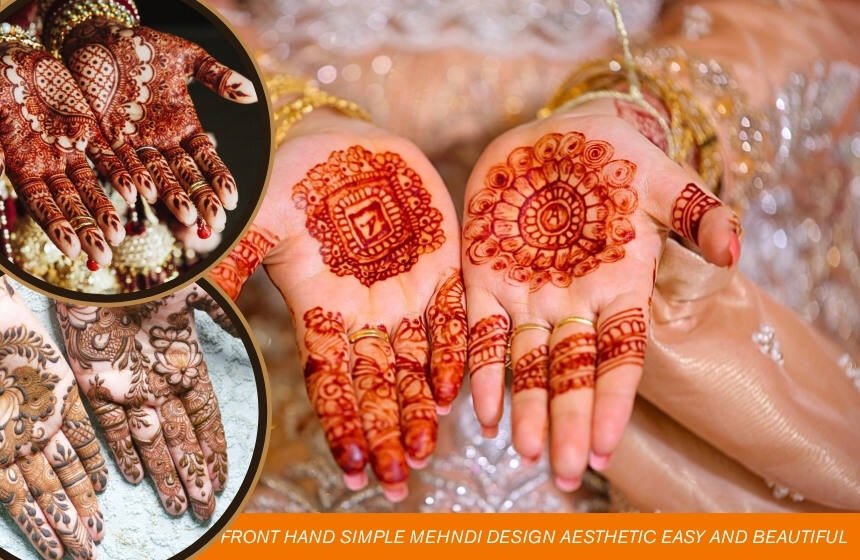
The front hand simple mehndi design is an ideal choice for those who wish for beautiful hands with a simple pattern or design. Delicate flowers, leaves, dots, lines, mandala patterns, and flowing vines can be combined in simple mehndi to create an elegant look while beautifully highlighting and leaving open space on the hand.
You can create an elegant, simple, and beautiful mehndi design for your hands and make your hands look festive without having to do an elaborate design for the wedding, Eid, Diwali, a mehndi function, or a family gathering.
The easiest basic designs are the ones that feature straight lines, well-balanced spacing, and repetitive minimalist motifs (like dots or petals). The options include a small central design, fingers only, pattern making for the wrists, or a combination of traditional designs with a modern minimalist approach.
Why Choose a Front Hand Simple Mehndi Design?
Simple front hand mehndi is a popular design as it offers you flexibility. But not having a full-hand design doesn’t mean that you can’t get a pretty finish. A well-considered flower or mandala, a vine, or a geometric figure can create a beautiful, striking look without overwhelming the hand.
If you want to have a less detailed look or don’t have enough time to spend on the design, a simple one might be the ideal option. Motifs like dots, leaves, flowers, and lines can be easier to work with than very complex patterns.
The other benefit is versatility. A light floral pattern can be good for any of the informal celebration, and a more elaborate one may be used for a wedding or a celebratory event.
Aesthetic, Easy, and Beautiful Front Hand Simple Mehndi Designs.
1 – Simple Floral Front Hand Mehndi Design
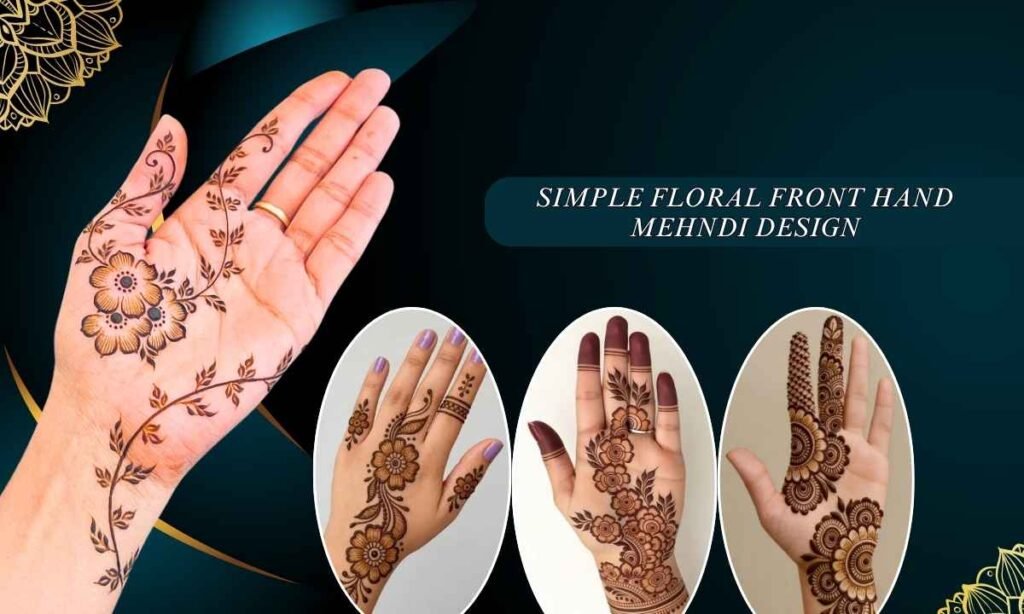
A classic option for a simple front hand design is a floral pattern. It can be done by placing one medium-sized flower in the center of the palm and surrounding it with small leaves, dots, and curved lines.
For a lighter style, you can create a path of small flowers that flows towards the fingers. Another alternative is to fill one side of the palm with flowers and leave the other side bare.
A floral design is a simple one, and that’s what makes it beautiful. It’s not necessary to fill in every part of the hand to create a nice appearance.
2 – Easy Mandala Mehndi Design
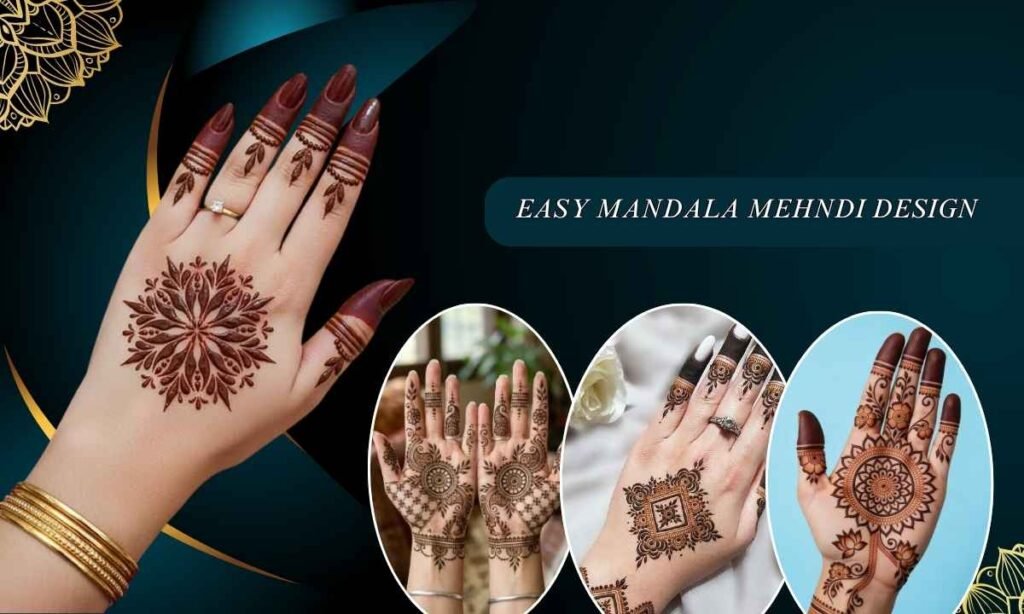
The design is inspired by a mandala, featuring circles, dots, petals, and repeating lines that form a balanced pattern. The little mandala in the middle of the palm can be the key element of the design.
If you’re a beginner, draw a basic circle, and then draw small petals on it. Dots and short lines can then be used to create other layers.
If you wish to do a mehndi design that is striking yet simple, a small mandala is most suitable as it does not cover the entire palm.
3 – Arabic-Style Simple Mehndi
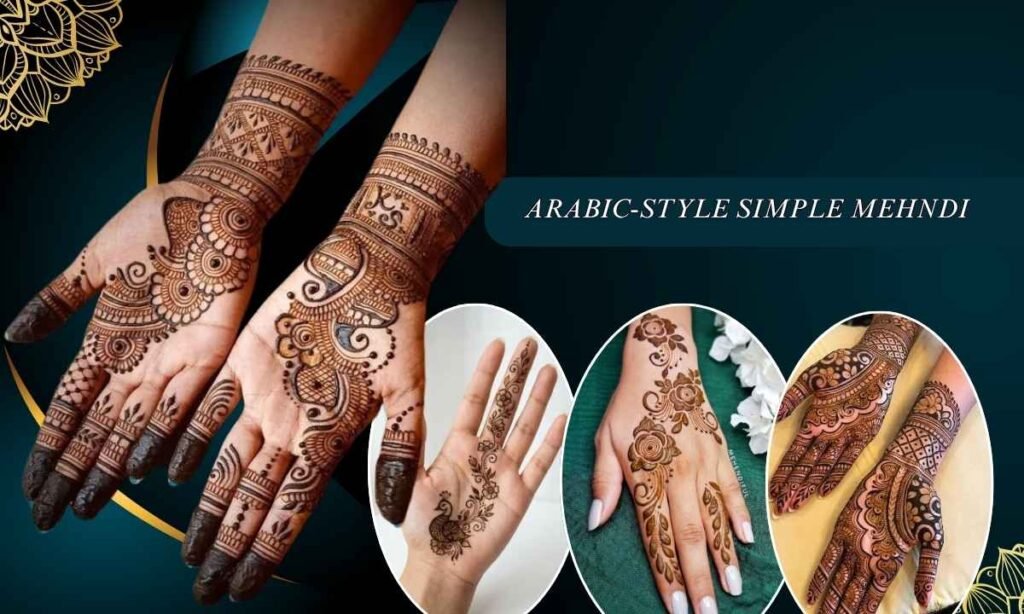
The mehndi motifs are typically designed with flowing floral and leafy patterns, with spaces between them, and are often inspired by Arabic designs, featuring one big flower that is joined to a curved vine, rather than covering the whole hand.
If you want a pretty look, the palm should be diagonally designed in the direction of the wrist or fingers.
Bold designs with a wide-open space make this style a great choice for those looking for an elegant, front-hand simple mehndi design.
4 – Minimal Finger Mehndi Design
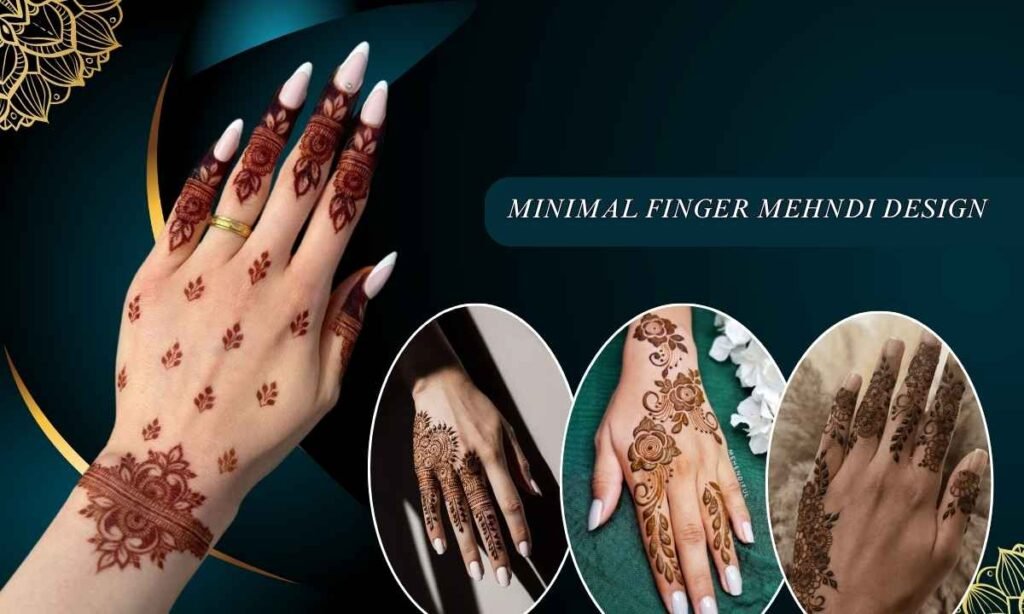
It’s not necessary to do a full palm decoration. A design that’s done on just the finger is very subtle and modern.
Use small dots, curves, small flowers, rings, shapes, or a combination of one or more fingers. The palm may be totally blank, or a small central theme may be placed.
Finger mehndi can also be easily personalized. The same pattern can be used on all fingers to give a symmetrical appearance, or slightly different patterns can be mixed for a more creative, eclectic look.
5 – Jewelry-Style Mehndi Design
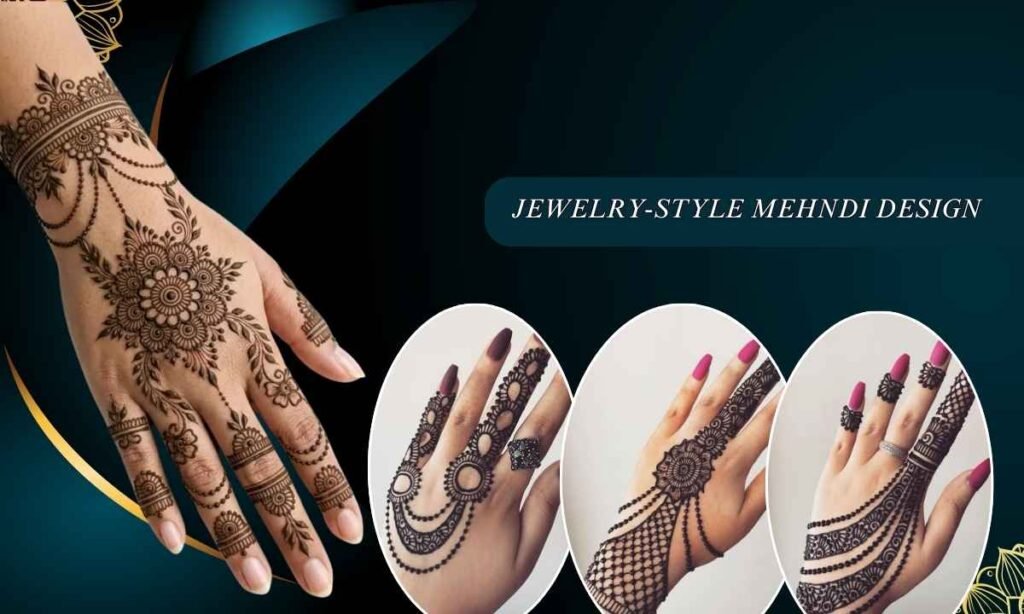
Patterns used in jewelry-inspired mehndi can be in the form of rings, bracelets, chains, or hand harnesses.
You can do a simple ring around one finger and then link it down to the wrist border using a series of delicate, thin henna chains. There is also a bracelet-type border on the wrist.
This design is great if you want your mehndi design to go with bangles, rings, or any other accessory.
Also, Read – Top 10 Simple and Aesthetic Mehndi Designs with Price List
6 – Mehndi Design: Akshar Art & Design
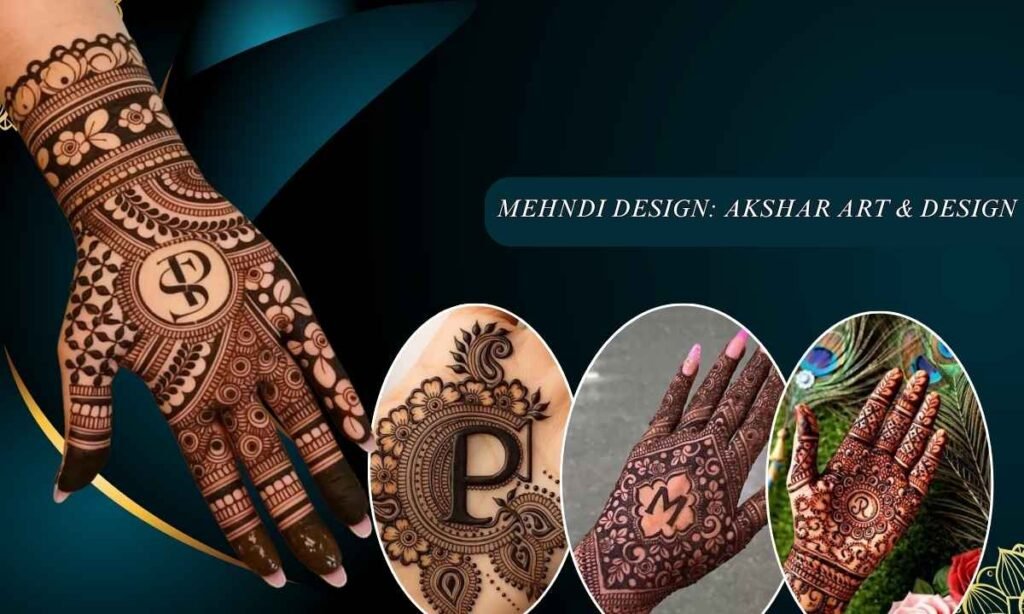
Among the easiest and simplest elements used in mehndi are dots and lines. They may be designed into borders, geometric designs, or flowers, or used in designs for decorative purposes.
The beginner might begin by sketching a couple of points around a main flower, then draw thin curved lines around these points. Other variations are possible and can be used to create a modern style with a mix of small triangles, circles, waves, and straight lines.
This is a good choice if you would like to have an easy design which isn’t going to overpower the hand.
7 – Mehndi with wooden sticks
A simple vine can be used to create an elegant and light look if it is moved across the palm. Attach small leaves to the vines and complete with a flower or a couple of dots.
The vine may be straight, curved, diagonal, or slightly winding, depending upon the shape of your hand.
If the leaves need to be particularly clean, then they can be trimmed down, and there must be sufficient distance between one element and the next.
8 – Peacock-Inspired Simple Mehndi
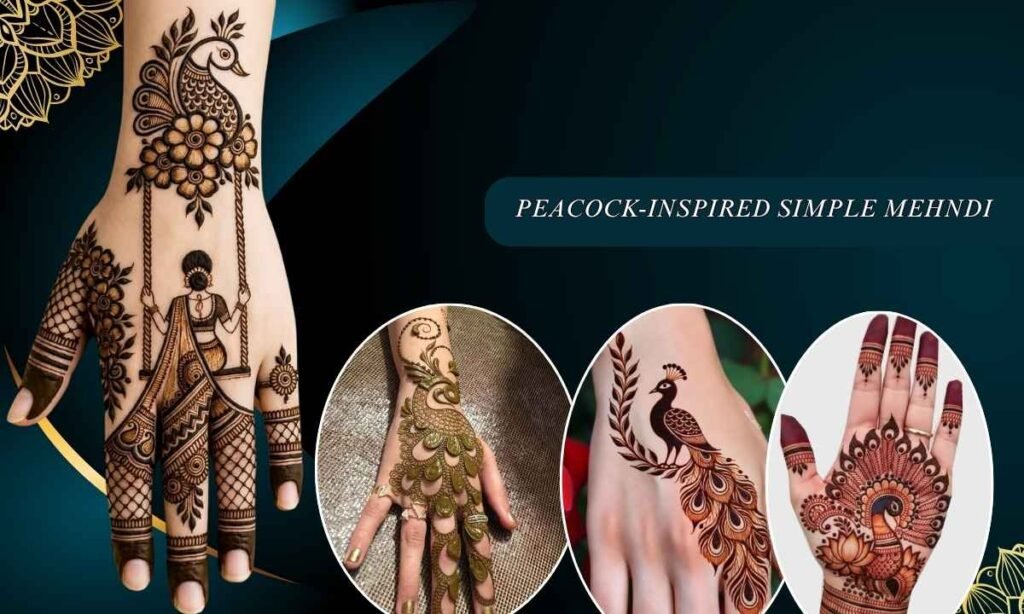
Indian Mehandi designs are frequently adorned with peacock designs. If you don’t want to make a very complex peacock, you don’t have to.
A small motif based on a peacock can be found in the center of the palm and can be surrounded by a few leaves, dots, or curved lines. A simpler pattern, inspired by the feather, can be used instead of the full bird.
This will help to achieve a traditional look with a light pattern.
9 – Wristband or Bracelet Mehndi Designs
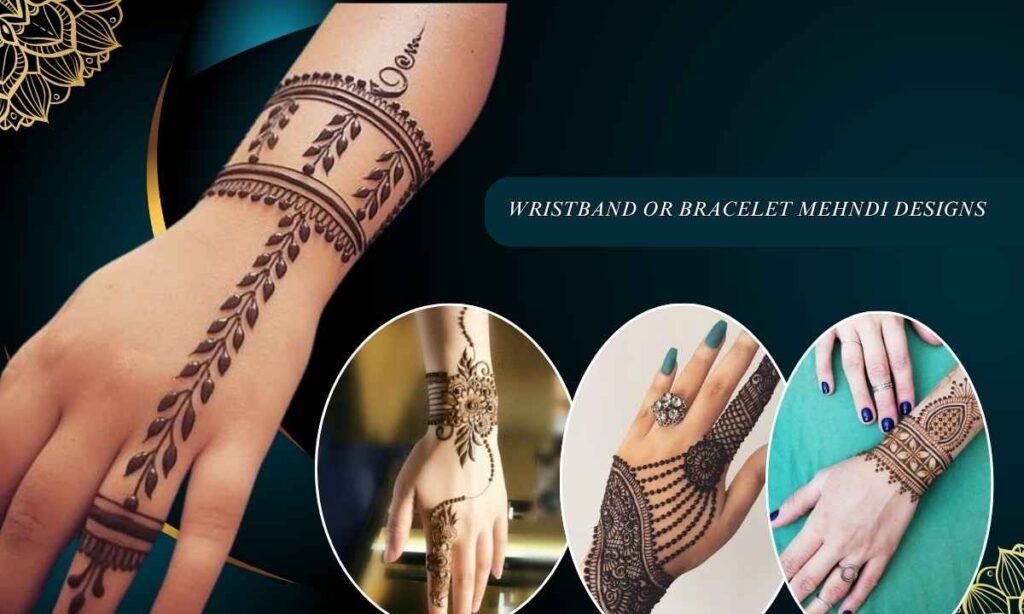
A wristband design is a design that concentrates on the region of the wrist instead of the palm.
A simple flower border, a chain design, geometric shapes, or dotted designs can be created. A small extension towards the palm can join the wristband with the design.
It’s a great option for individuals who wish to have less mehndi and want to leave more space on the front of the hand clear.
10 – Indo-Arabic Simple Mehndi Design
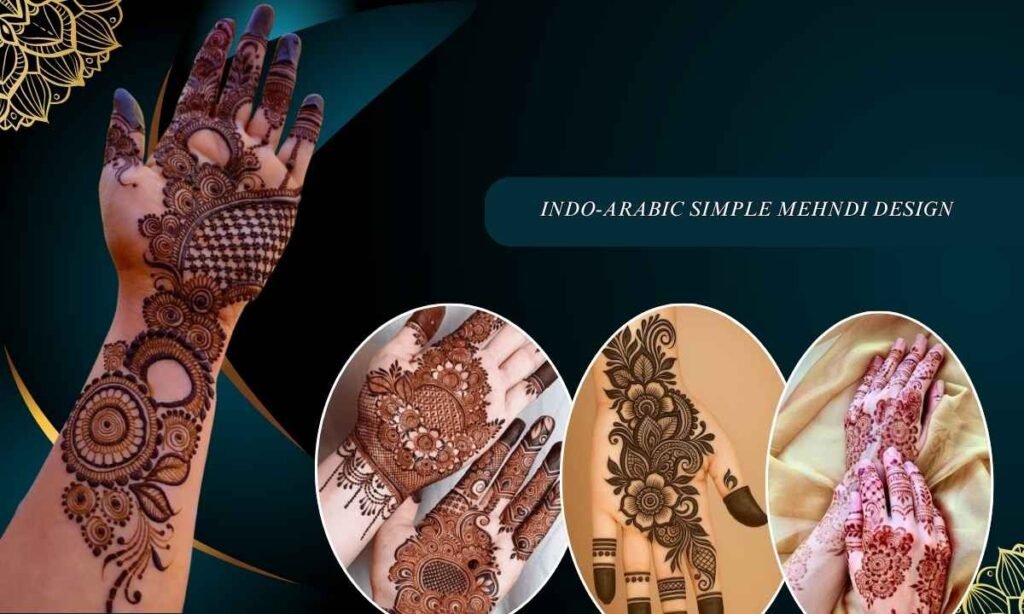
Indo-Arabic mehndi is a mixture of the connotations of Indian and Arabic-inspired patterns. If you want to use a small, detailed flower or mandala as the focal piece, then you can have a flowing vine that runs to the wrist leading up to it.
To maintain simplicity with this style, the main thing is not to fill it up too much. Patterns can be used sparingly to create a more appealing effect than overusing patterns.
11 – Minimalist Bridal Mehndi
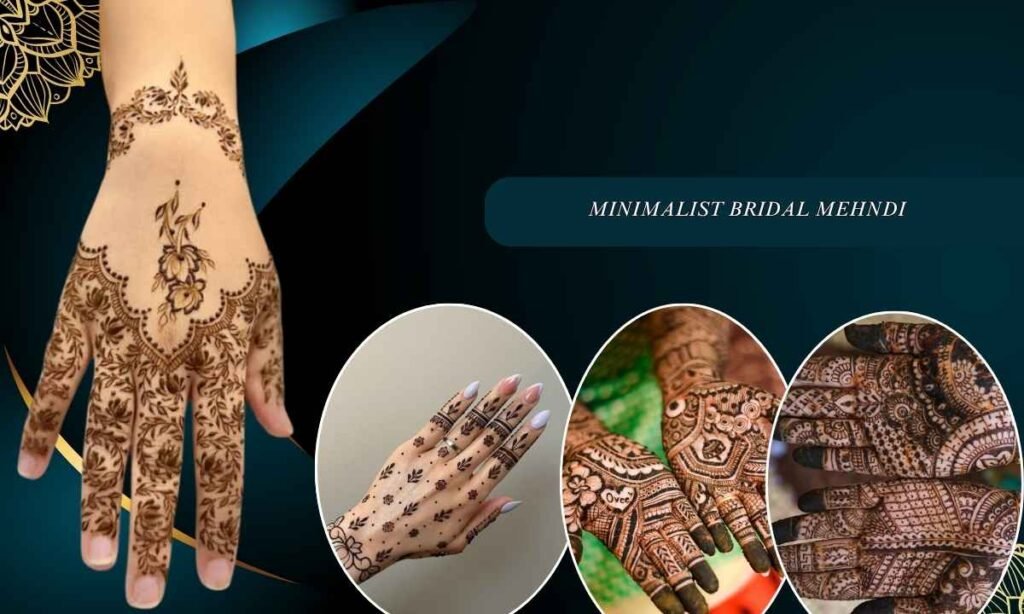
For those who go for a lighter feel, traditional motifs can be used in a minimalist style.
A small paisley, flower, peacock (or bride and groom) pattern can serve as the focal point. It should not occupy the entire palm, but should be surrounded by one or two leaves and decorative lines.
This style will provide you with a link to the traditional mehndi style and will be very clean and modern.
12 – Back-of-Hand Simple Mehndi
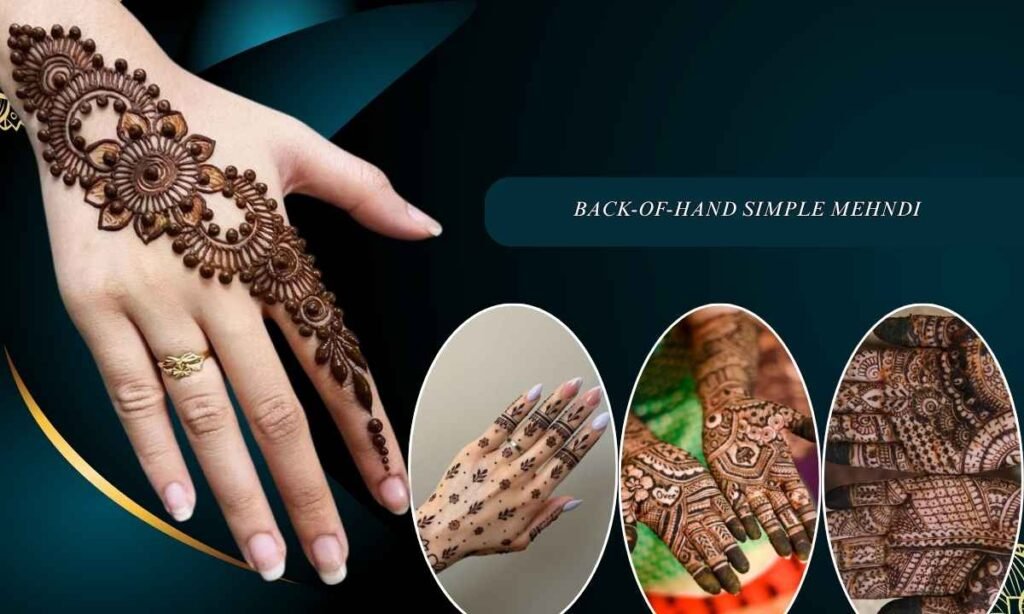
Note that a back-of-hand design doesn’t necessarily extend across the palm. The back of the hand can be the primary theme with a small lotus, flower, mandala, or geometric design.
A motif or design may be placed at the center of the knuckles with a finger design or wrist pattern. The open area around it can help accentuate the main design.
This is a great way to have a simple but prominent accent.
How to Choose the Right Front Hand Mehndi Design
The style will be determined by the occasion, your personal style, and the amount of detail you want.
If you want a simple design, opt for a wristband, dots, small flowers, or finger designs.
More decorative designs can be used for festivals, floral, mandala, Arabic, and leafy designs.
Wedding and engagement designs can be in the jewelry style, Indo-Arabic, peacock, or minimalist bridal patterns.
As a beginner, don’t go for a fancy pattern; opt for simple shapes instead. If you use a simple pattern and do it well, it will look better than a complicated pattern that you can’t do.
How to Apply a Simple Front Hand Mehndi Design at Home
Working slowly makes it easy to make a simple design in the house.
Step 1: Clean your hands
Before putting on the mehndi, wash your hands and make sure that there is no oil, cream, or lotion on the skin. This can block the dye from staining.
Step 2: Select the Design
Choose your reference before starting. If you are new to mehndi, practice the main elements on paper first.
Step 3: Start with the main motif
Start with the focal point of the flower, mandala, paisley, or whatever it is, which will provide a definite starting point.
Step 4: Add in smaller details
After you have the main motif, put in leaves, dots, curved lines, or little flowers surrounding it.
Step 5: Maintain spacing
Avoid filling up empty spaces, which leaves a bit of bare skin that helps the simplicity of the design look clean and elegant.
Step 6: Air the paste to dry
Let the mehndi paste dry; do not rub it or touch it unnecessarily, which helps avoid ruining the design. Follow the directions given with the product you are using.
Step 7: Carefully take off the dried paste
When the paste dries, carefully peel it off. Do not be too aggressive in rubbing the skin.
The final stain is a result of a process of time and may not look the same at the moment of staining with the paste.
Tips to Make Your Mehndi Look More Aesthetic
With a simple design, the balance of details can create beauty.
Stick to the main theme: Do not add too many elements around your central design, which can quickly clutter the layout.
Fill in the negative space: Empty space can add to a simple pattern to make it more modern and clean.
Keep stroke consistency: Make an effort to have strokes of a fairly steady thickness.
Compare both sides: When making a symmetrical design, balance both sides of the design as you create it.
Use limited combinations of motifs: Flowers, leaves, dots, and curves are acceptable combinations; they do not create a ‘crowded’ pattern.
Consider your outfit: Traditional floral and paisley prints can go with ethnic clothes, while the geometric and jewelry-inspired prints can be used with modern clothes.
Practice the basic shapes first: Even if you already know a basic design, it becomes easier with practice on the basic shapes before you put them into practice on your hand.
Best Occasions for a Simple Front Hand Mehndi Design
Aesthetic front hand mehndi can be modified for a number of events, like:
- Weddings
- Engagement ceremonies
- Mehndi functions
- Eid celebrations
- Diwali
- Karva Chauth
- Family celebrations
- Festivals
- Baby showers
- College events
- Festive office occasions
- Pre-wedding celebrations
If it’s a big celebration, you may want to select a slightly more detailed design. A small flower, finger, or wrist design will suffice for everyday or casual wear.
Mehndi Safety Tips
Be careful while selecting your mehndi product and read the ingredients and labels. Proceed with great care when using products that are referred to as “black henna.”
The U.S. Food and Drug Administration (FDA) says that some people may have harmful skin reactions to products sold as black henna, which contain a hair dye ingredient called p-phenylenediamine (PPD). In addition, the FDA has received reports of skin injuries with products labeled as henna and black henna.
If the reaction to the application of a product is more or different than usual, discontinue use and seek proper medical advice.
Final Thoughts
A Front Hand Simple Mehndi Design doesn’t require complex designs to be lovely. Strategically placed flowers, a mandala, a leafy vine, a finger pattern, or a jewelry-inspired design will give an elegant look without creating the clutter of a complicated design.
When you need an aesthetic, easy, and beautiful front hand mehndi design, begin with a design that’s like your skill level and the event. Be mindful of balance and negative space, and don’t overdetail the work.
Whether it’s for a casual gathering with simple floral designs, or a wedding with a minimalistic look for brides and Indo-Arabic for weddings, you can achieve a traditional look, modern look, and a personal look with a front hand mehndi design.
Frequently Asked Questions
Patterns, dots, and leaves, simple lines, and basic geometric shapes work well for beginners. They are made of basic shapes and can be modified for use by various hand sizes.
No one design is right for all people. In fact, any type of floral, mandala, Arabic, jewelry-style, and Indo-Arabic patterns can be attractive if the pattern is well-spaced and properly detailed.
Yes. Dots, lines, flowers, leaves, and small geometric shapes are good to begin with for beginners. Learning the basic elements on paper before applying them in practice can facilitate the application process.
Keep lines clean, spacing on point, and the main “image” clear. Allowing parts of the hand to be exposed will also make the design appear less crowded.
Also, Read –
Lotus Mehndi Design Ideas: Top 20 Simple Front & Back Hand Patterns for Girls
